Johanna Hedva
We Are All Evil
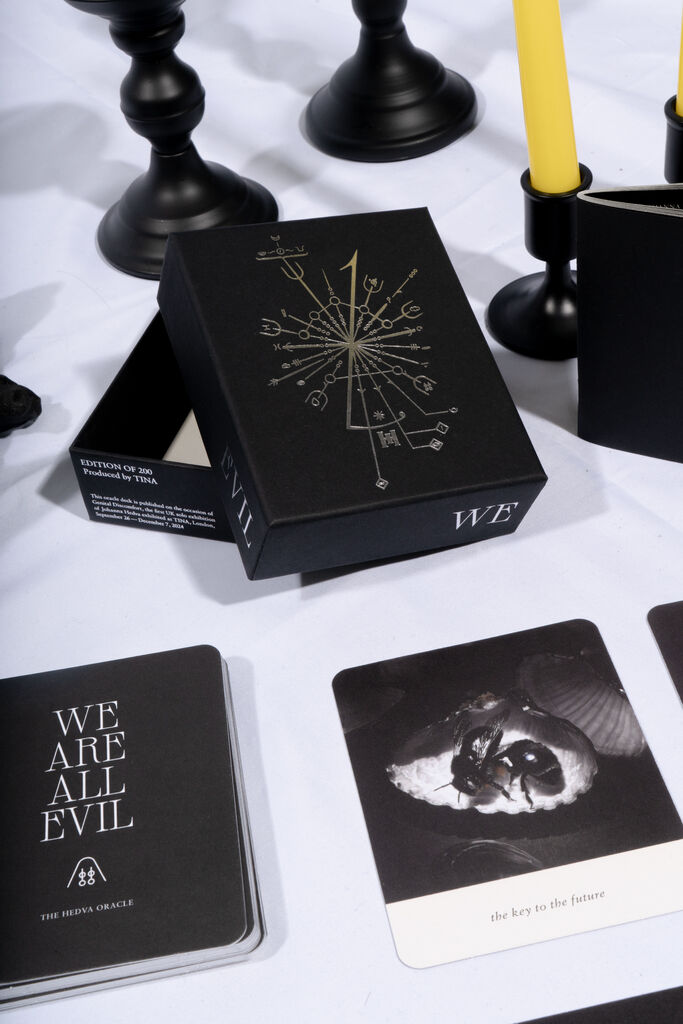
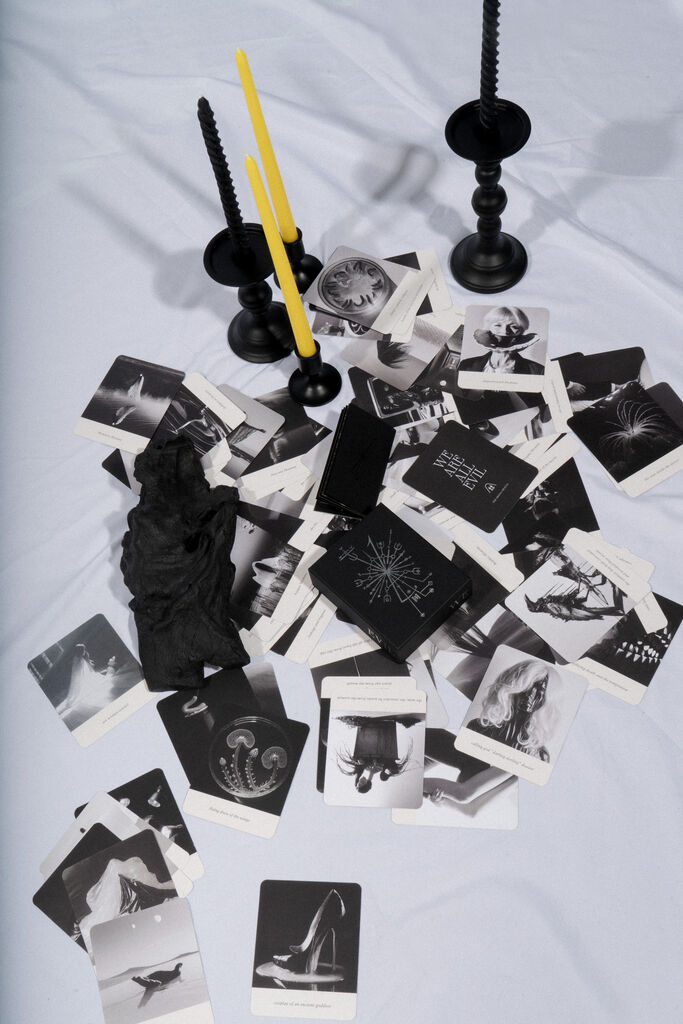
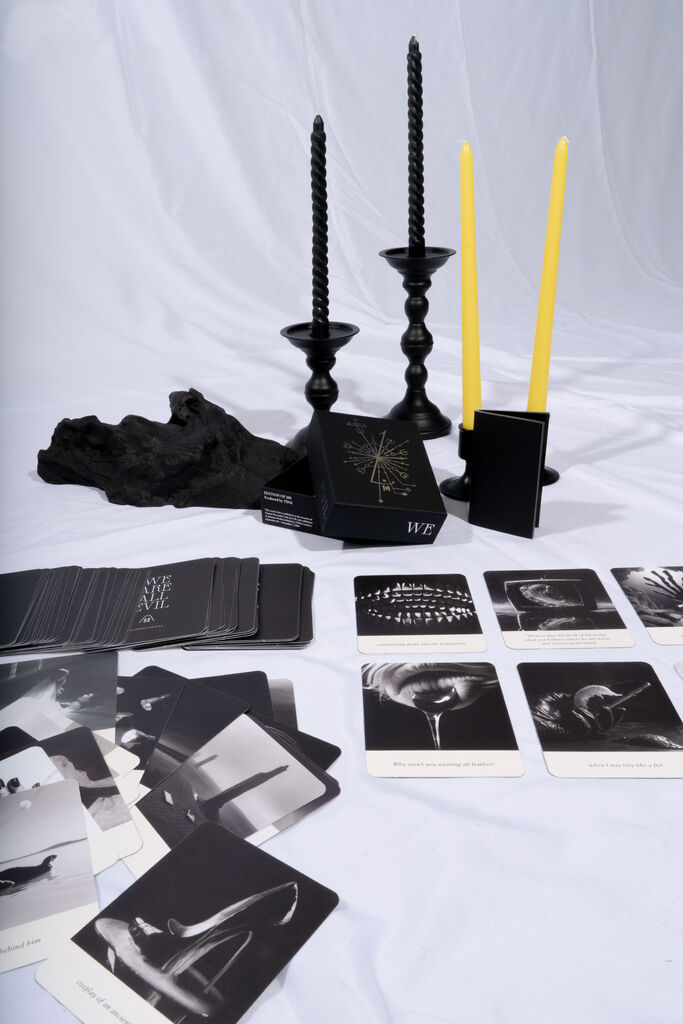
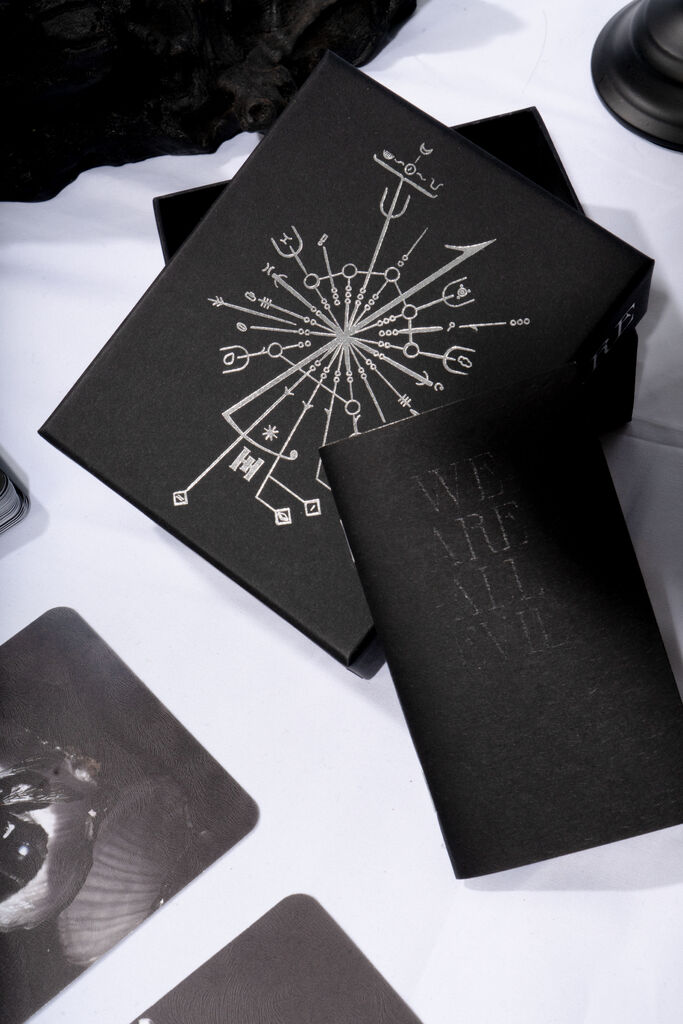
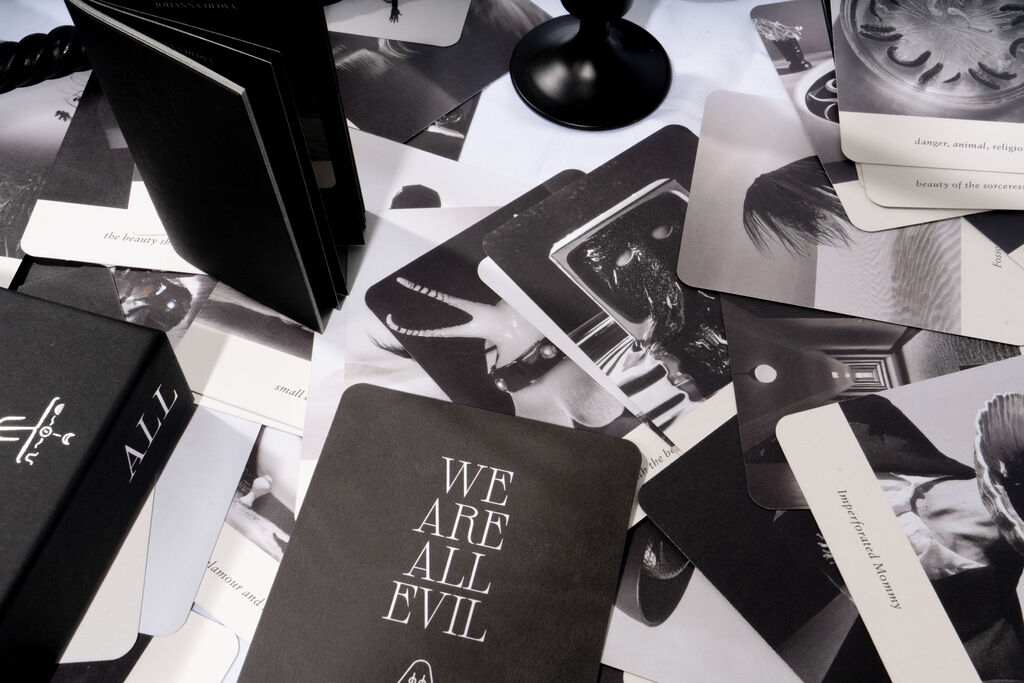
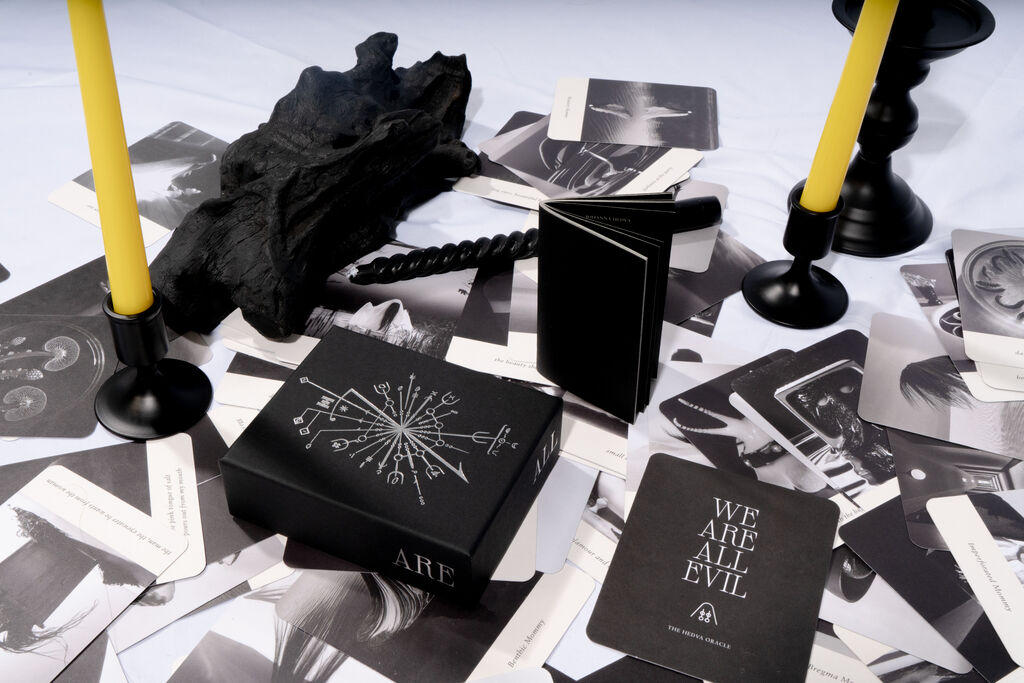
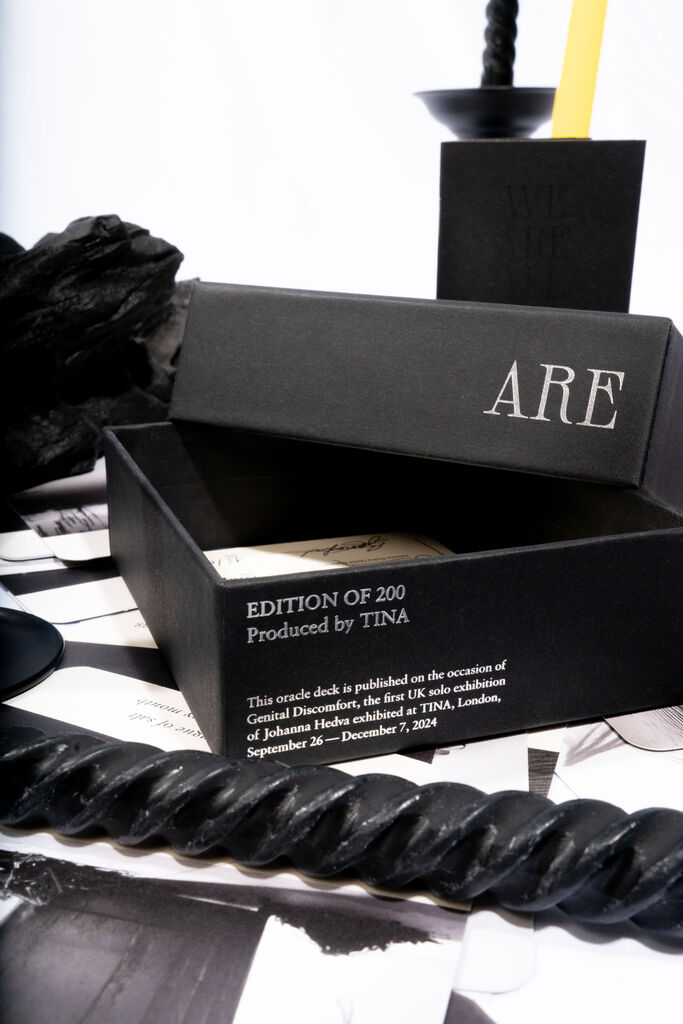
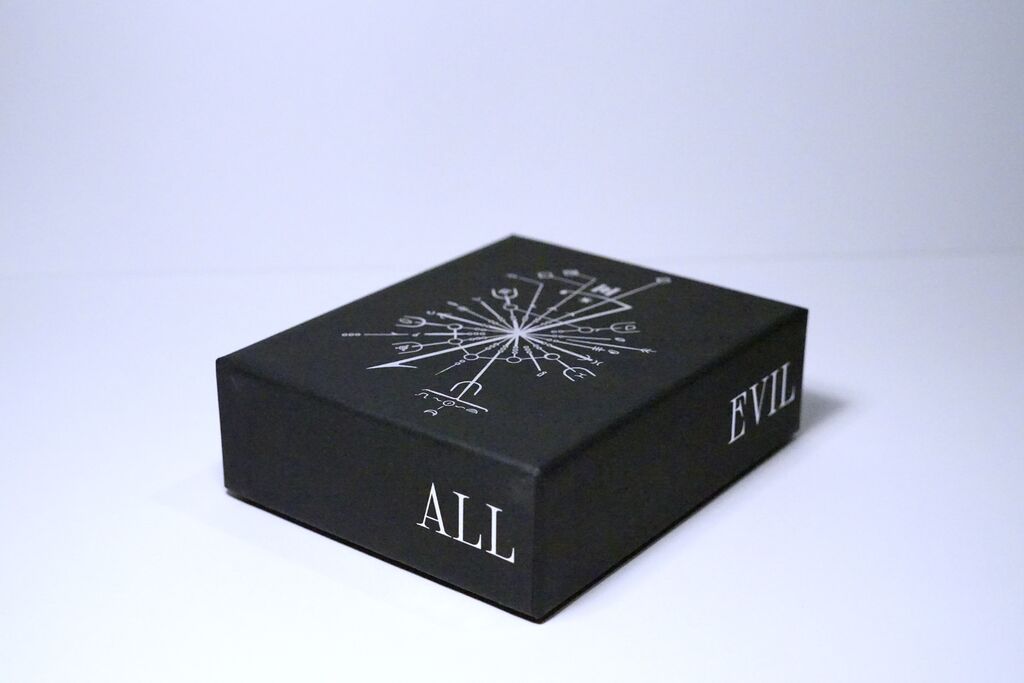
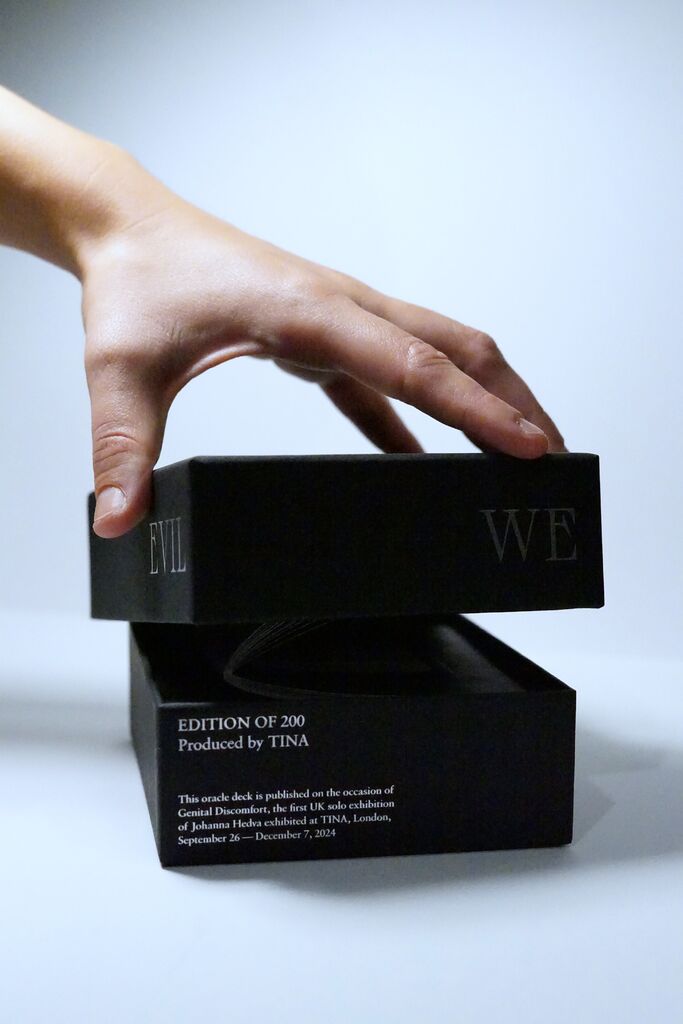
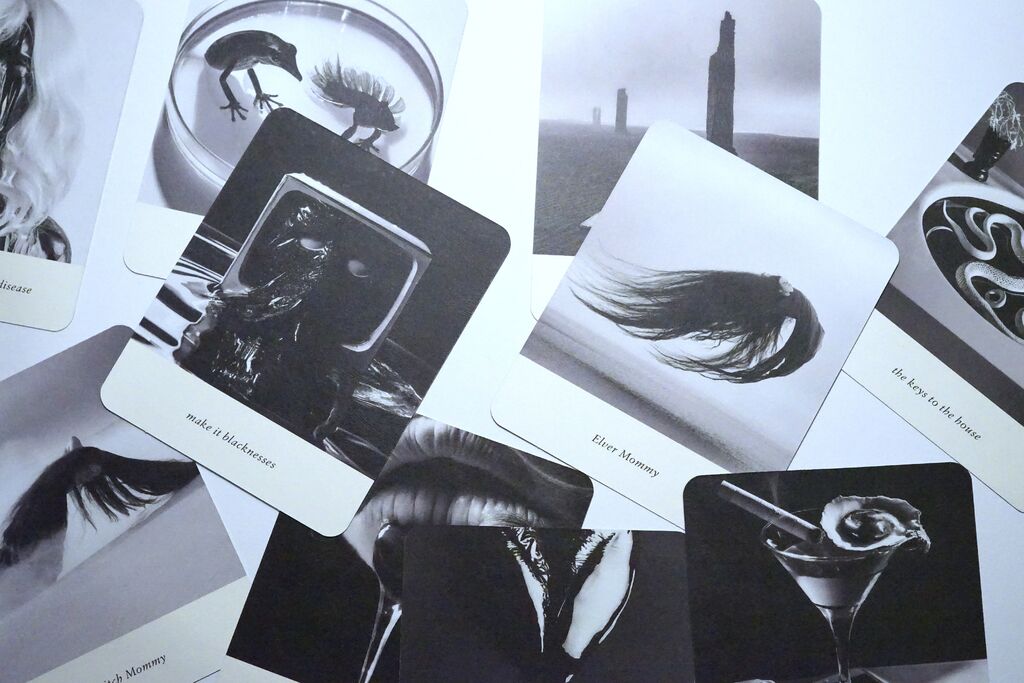
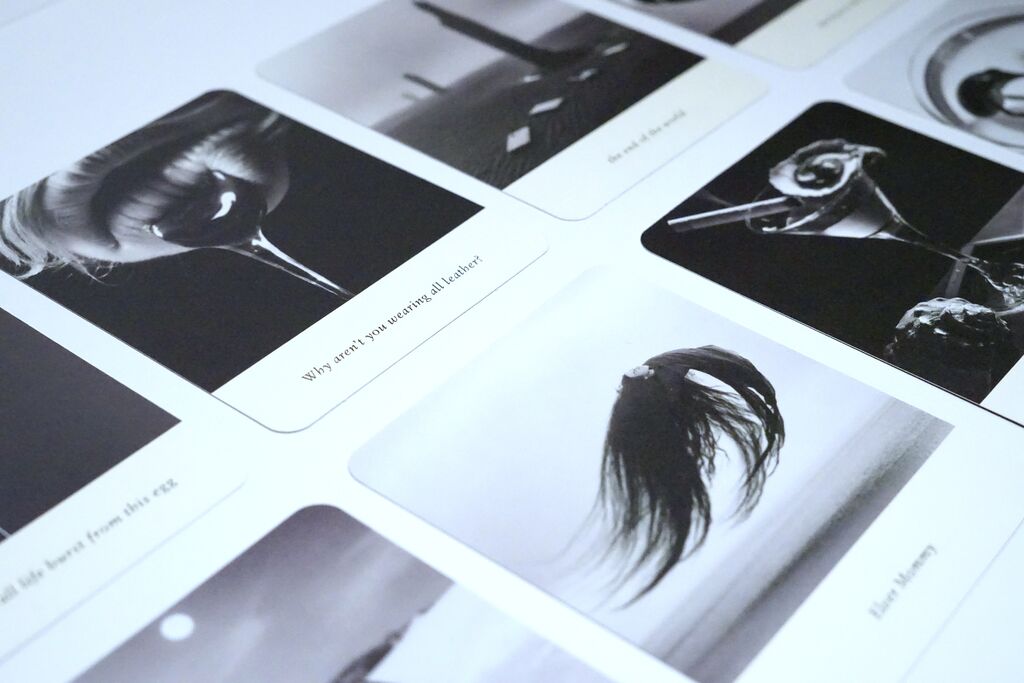
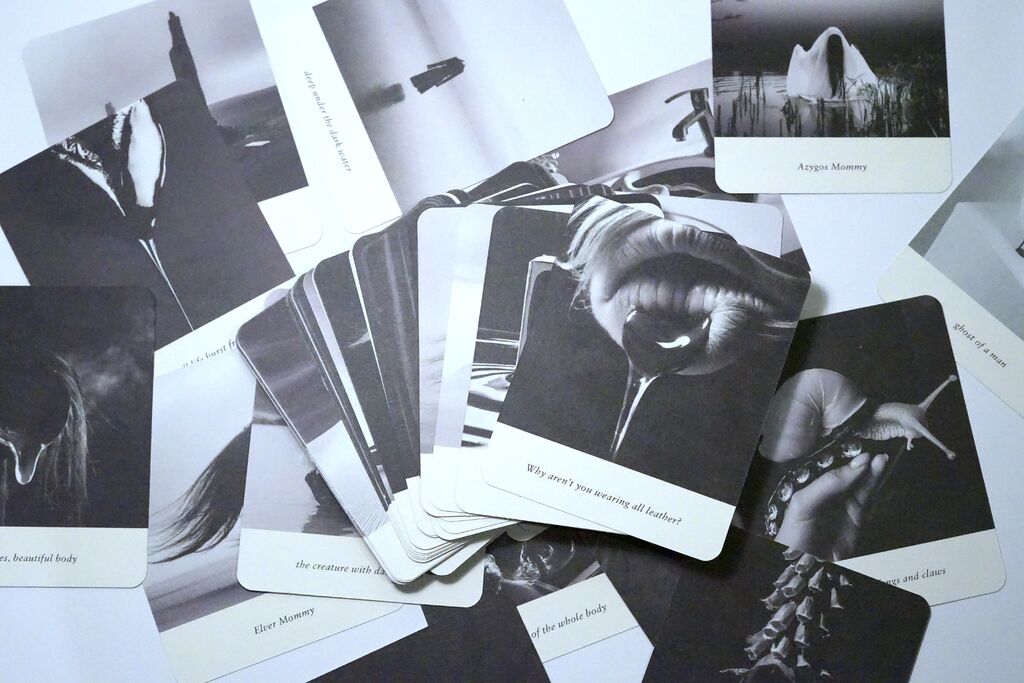
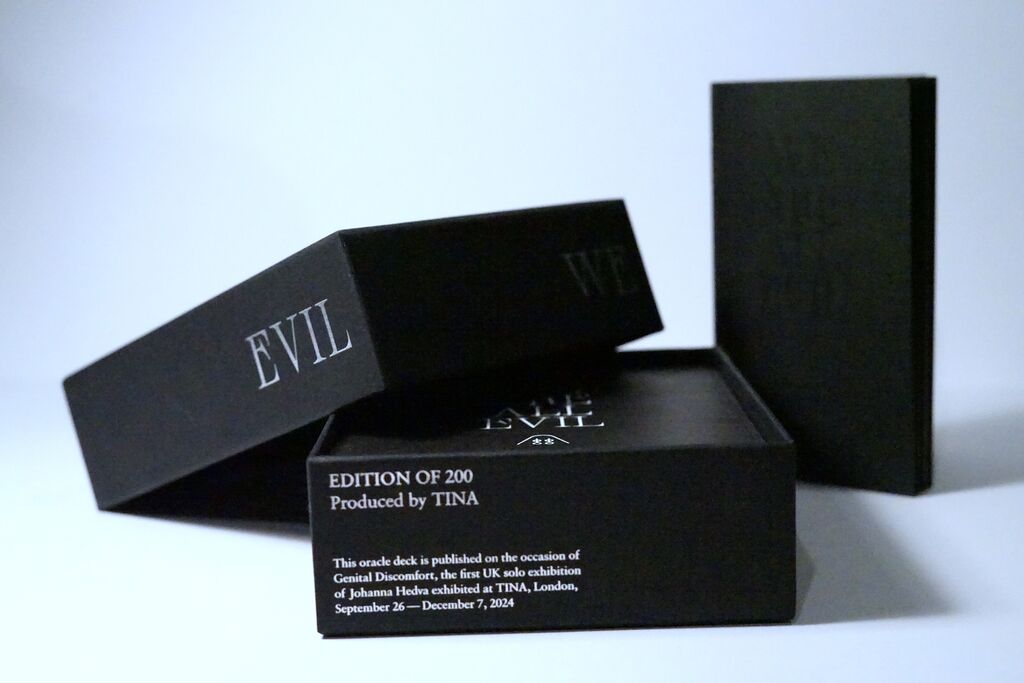
We Are All Evil is a limited edition oracle deck with booklet about the aesthetic, ethical, and political implications of AI and divination. The deck consists of 80 unique images made by Hedva with Adobe Firefly’s AI Text to Image generator, with each card posing a mystical conundrum that, if approached with inquiry, can function like a koan. The deck is loosely based on the tarot structure but recasts the major arcana as archetypes of Mommy. The accompanying 64 page booklet collects excerpts of text critical of AI, elucidating its weaponisation by state and corporate power for nefarious ends. The deck is printed and embossed on 350gsm Callisto Diamond White cards, presented in a box with a silver embossed custom sigil, and will come with a signed certificate of authenticity as a limited edition work of 200.
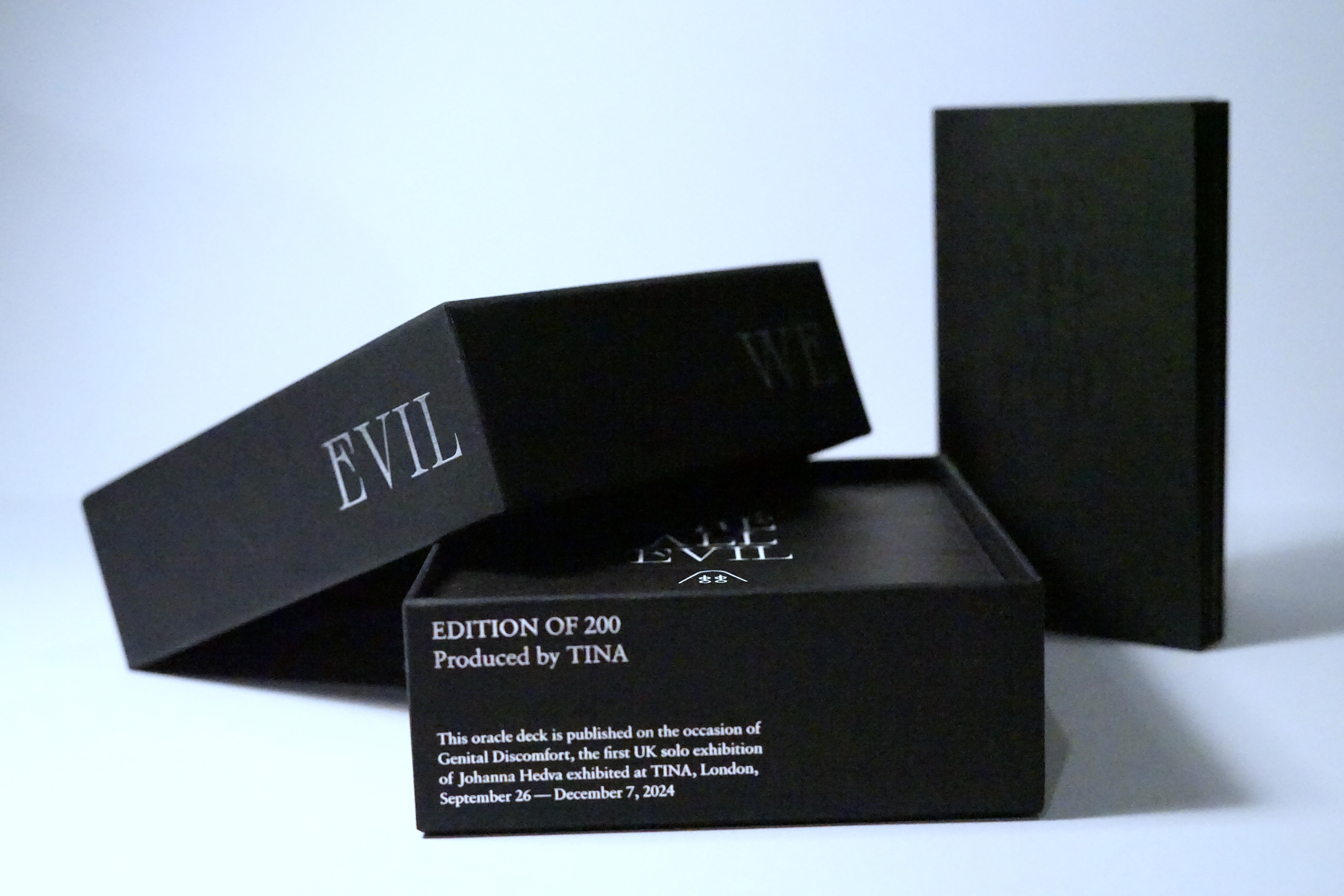
We Are All Evil
A conversation between Johanna Hedva and Lynton Talbot
Summer 2025
This summer, as Johanna Hedva prepared for their participation in the Seoul Mediacity Biennale, I read their forthcoming e-flux essay, What is the Opposite of an Epiphany? Notes at a Dawning, and wanted to discuss some of these ideas in relation to a recent project with TINA. We Are All Evil (2024) is an Oracle Deck Johanna made on the occasion of their solo show at the gallery in September 2024 called Genital Discomfort. Its reliance on, and critical antagonism to AI held both technological and esoteric divination in a balance that to me, continues to speak to a particular condition of the contemporary moment. Reading the e-flux text, I began to wonder about the relationship Hedva has to ongoing discourse around the contemporary and if their work, including We Are All Evil, charts a radically different perspective.
Over the last decade, so many anthologies have asked what ‘the contemporary’ even is, often defining it only in contrast to modernity’s chrononormative march of progress, the belief that technology and social equity would deliver resolution to the world’s crises. We know now that this project failed. Instead, technology, and AI in particular, has ushered in a new kind of instability, one exacerbated by capital interest, exploitative labour practices and a kind of land grab over the very tools modernity once hoped might be egalitarian. So, I wonder: rather than the exhausted platitudes of flux, uncertainty and fluidity we hear describe the now, could this historical moment be characterised by grief in Hedva’s work? Grief as a liminal state, a death without death; something ending, something beginning, the collapse of human supremacy over intelligence itself. For the first time in human history, we must contend with no longer holding exclusive claim to intelligence, something once seen as definingly human. Perhaps what we are experiencing now is the collective mourning of that loss: the denial, anger, bargaining, and eventual acceptance of sharing this space with something nonhuman, rapidly evolving alongside us.
And yet, this grief feels deeply millennial-coded. Our generation came of age without digital technology, without AI, in what at the time felt like a relatively stable global climate—prosperity before the crash of 2008, illusions of social mission however flawed, an ambient sense of stability that Gen Z has never known. We have one foot in that past of hope and another in the present of catastrophe, having witnessed the arrival of collapse and the vanishing of certainty. Could grief, then, be the condition of our contemporaneity—the state of living in between?
These were the thoughts I had while reading Johanna Hedva’s essay and particularly while living with their oracle deck We Are All Evil. The deck seems to stage this confrontation directly, moving between awe and dread, divination and despair, as though searching for where hope (or perhaps mischief) might still be found in this slow-moving apocalypse. In the following conversation, I asked Hedva about grief, millennial contemporaneity, and what divination might offer us at, as they put it, “the end of the world.”
LT: Your oracle deck We Are All Evil sits at the intersection of AI, divination, and grief. Do you see the deck as a way to process a kind of collective mourning? Perhaps not of a person, but of human supremacy over intelligence, or the collapse of a stable future? What role does grief play in this work?
JH: I know many artists who renounce it entirely, and I understand and sympathize with them. But I worry that such a withdrawal will mean that AI will be so much worse if the most brilliantly critical thinking artists and writers of our time remove themselves from this critical stage of AI’s development. Of course, I worry that I’m terribly naive for thinking this. It’s a crushing thing to ponder—like, how could it be worse than it already is? Am I being too romantic about artists?
I really don’t want us to treat AI as either a god or a devil—to tremble in awe before its power. But when I say that, I realize I’m hoping for an “us” that doesn’t exist. There is always the question of who is controlling it, who is being controlled by it, and who is paying for this in all senses of the word “pay.”
The other day I read a New York Times Op-Ed, “What My Daughter Told ChatGPT Before She Took Her Life,” by Laura Reiley. Reiley is the grieving mother of a daughter who relied heavily on a therapist chatbot before suiciding. In the piece, Reiley wonders if the AI chatbot could have been programmed to intervene in more intensive ways that could have prevented her daughter’s suicide. She traces the ways the chatbot responded to her daughter’s confiding of feelings of despair and suicidal ideation, and although some of them were good, she finds that it didn’t do enough to challenge her daughter’s thinking. I understand this mother’s pain, this is a heartbreaking story—but I also think about a future where AIs are programmed to automatically call the police and involuntarily incarcerate someone, and where their mental health progress is then monitored by AIs who decide when, if ever, the person is deemed fit to return to society. Involuntarily committing someone means confining them to an institution. They will be forced to take medication in these places, they will be invasively monitored and evaluated by some of the most violent systems of determining “normalcy.” The power of the surveillance- and carceral-state is already so entangled with ableism and eugenics; we are already living in the most dystopian sci-fi films from decades ago!
So, yes, I have a lot of anxieties and dread about AI. The work I’ve made about AI tries to reach into this—the philosophical, political, and visceral squirmings. But I don’t necessarily think the work I make about AI is propelled by grief, per se, because I understand grief to happen after something is over. This feels much more present, urgent, something that is starting right now. I’ve been working with AI since my project GLUT (A Superabundance of Nothing), which was in 2021, so not even that long. I’m antagonistic and hostile to AI, but I also think one needs to be mischievous when approaching it. Can grief be mischievous?
LT: Many artists and theorists have tried to define the “contemporary” in contrast to modernity’s narrative of progress. An almost futile task. Your work feels steeped in what I might call (and am attempting to myself define) as “millennial contemporaneity”; more of a sensibility shaped by disillusionment, digital transition, and existential instability. How do you think our generation’s experience of the contemporary shaped the emotional and aesthetic tone of this project?
JH: The way I can answer that question is to talk about a character that’s really been on my mind this year, that I’m calling The Fortuneteller at the End of the World. This is a persona I’ve taken on and embodied, and started to use in my work. It comes from my interest and research in the Jeoseung Saja, the Korean Grim Reaper, a psychopomp and death deity who guides souls to the underworld. I’ve embodied the Jeoseung Saja in various performances and images for the last several years, and I see The Fortuneteller at the End of the World as a sister, or perhaps an ancestor or descendant of that lineage of work—I am both.
I pay my rent by doing astrology readings. I’ve read astrology for people for more than ten years. My clients are crip, queer, poor or working class, often people of color or from lineages of colonialism and diaspora, equal parts visionary and struggling, geniuses and oppressed, artists and activists, thinkers and lovers, students and teachers. Reading for people like this is a practice of being in deep philosophical conversations about the problem of what can even be done in the world. My clients and I talk about the feeling of the present, the state of the world right now, and what we can do to change or affect the future. We reach for ways to thwart determinisms that feel restrictive, to find methods of agency within larger infrastructures of determinacy. It’s about the very conundrum of fate and will—how to meet one’s fate.
I started to notice that I appear in my clients’ lives often at moments when they feel helpless or overwhelmed. They are seeking guidance and insight and a way forward in what feels like a wreckage of devastating life events (heartbreak, failure, illness, disability, death)—so I very much appear, like the Jeoseung Saja, as a sort of psychopomp to guide their soul through an underworld. But as much as their troubles are personal, often they suffer because of society’s systems of oppression, and I am not at all interested in neoliberal solutions to this.
So, the figure of “the fortuneteller at the end of the world” has appeared for me as a kind of guide as what I can embody for others as their guide. We are trying to move forward in the dark, in the ruins. I immediately wonder what a fortuneteller at the end of the world would even have to foretell. If it’s the end, what kind of future can be divined? What future is there?
LT: Oracle decks traditionally mediate between the human and the divine or the unknown. In We Are All Evil, that mediation seems to have been itself mediated. Not so much AI as oracle but an acknowledgement that AI inflects every facet of our experience, here pointedly complexifying a relationship between the human and the divine. What do you think creating a divinatory tool using a technology that itself unsettles the boundaries of knowledge, authorship, and even humanness can tell us about this new era of sharing our intelligence? Is this something We Are All Evil contends with do you think?
JH: At the time I was making the We Are Evil deck, in 2024, I wanted to reach into and document the feeling that AI was bringing then: there was awe, even a sublime or religious awe, at AI’s capacity and facility, how vast and versatile it was; and there was an equally intense dread, an outright terror about its failings, its weaponizations, and what was being determined about its becomings and outcomes, where it was going.
There are horrifying and very evil ways AI is programmed, trained, and used, and little of this can be determined by individual users. AI is irreducibly knotted into and leveraged by the military industrial-complex, the police and carceral state, surveillance capitalism, and Israel’s genocide in Gaza, and the West’s complicity in that. At the same time, there are faces of it that are goofy and whimsical and vacuous, like a chatbot that talks to you like “your older lesbian sister” or a filter on Instagram that makes you look like the hero of a superhero squad.
I don’t think AI is a god or a devil. I refuse to worship it, give it that power. I also don’t find much use in being afraid of it. To me, it’s the dirty mirror of humans in late-stage capitalism, dirtied by some of our most treacherous desires. I am very interested in thinking through what those implications are, what those desires will determine, and how the fates of them can be kinked, deviated, changed. I don’t want to be afraid of a mirror, any mirror, nor do I want to be afraid of what is being reflected in it. But what to do when that mirror is reflecting something horrifying? What if it’s reflecting one’s own face?
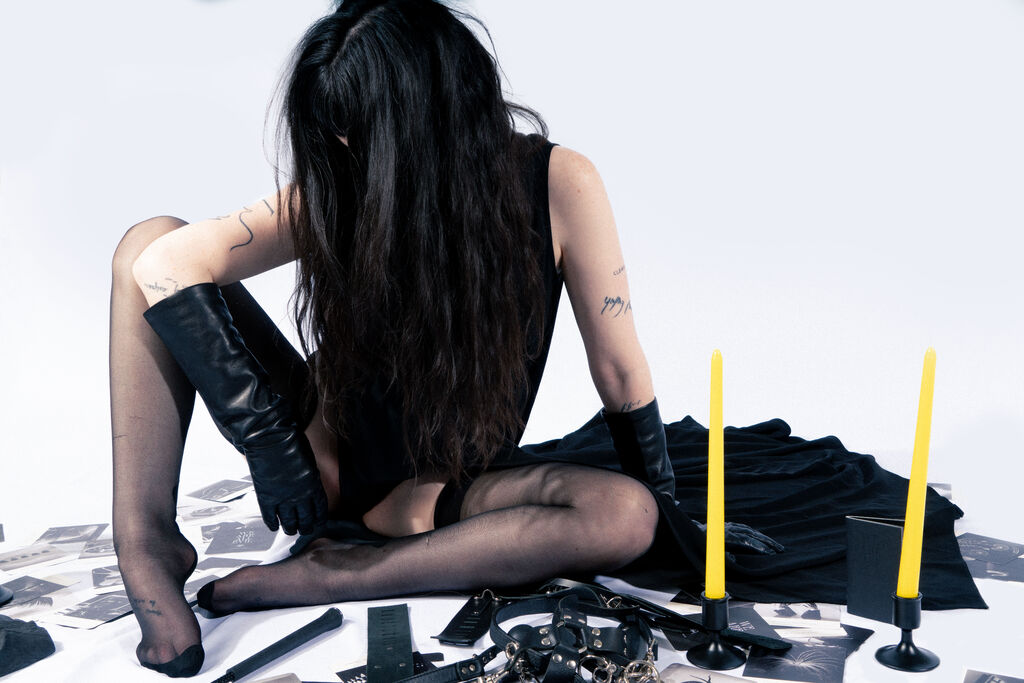
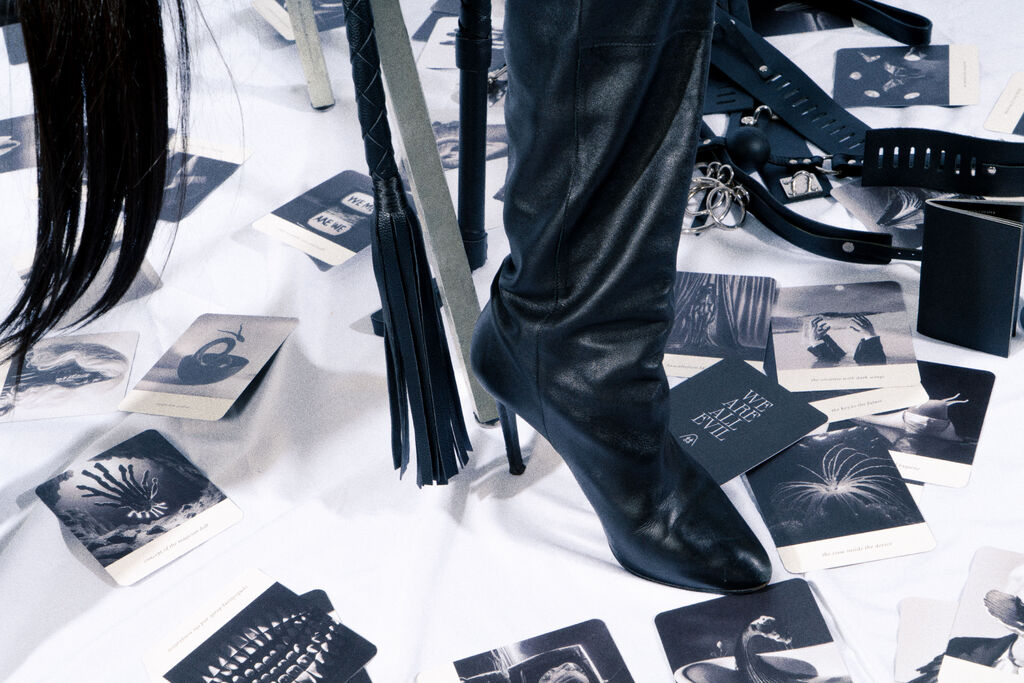
Images: Designed and Directed by Sadia Quddus Photographed by Dougal Henken
Editions
Johanna Hedva
We Are All Evil, 2024
80 Card Oracle Deck
11.4 x 14 x 4.3 cm
4.45 x 5.4 x 1.7 inches
Edition of 200
£100 (+ £20 P&P)